

A new wave of women redefining biopharma

Author: Sacha Billett
Pharmaceutical organisations increasingly recognise that inclusion is essential for innovation, workforce resilience, and robust scientific decision-making. Information professionals play a pivotal role in this, operating at the intersection of people, knowledge and systems. Through their work, they influence how scientific communities connect, how information is shared, and how equitable practices take root.
Our conversation with Dr. Shae Taylor offers a clear view of the challenges women encounter in biopharma and highlights how thoughtful information practices can strengthen participation and visibility across the sector.
Introducing Dr. Shae Taylor
Dr. Shae Taylor’s career reflects a rare combination of scientific depth, technical expertise, and sustained advocacy for women in STEM. With dual degrees in biology and chemistry, she began her career as an analytical chemist before moving into engineering roles and, later, marketing.
In 2000, she joined Agilent Technologies as a field service engineer specialising in liquid chromatography at a time when only 3 per cent of Agilent’s US field service engineers were women. Alongside her technical work, Taylor became an active leader in the Society of Women Engineers (SWE), heading the SWE@Agilent Employee Network Group, the organisation’s first employee network and for many years its only women‑focused group.
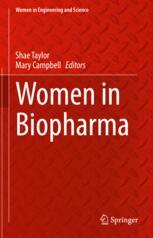
Today, as North American Marketing Program Manager at Agilent, Taylor draws on a broad perspective shaped by scientific practice, engineering, advocacy, and customer engagement. Her book, Women in Biopharma, part of the Women in Engineering and Science series, documents the professional journeys of women across the global biopharmaceutical industry.
The spark behind Women in Biopharma
The idea for the book emerged at a Society of Women Engineers conference, where series editor Jill S. Tietjen led a session on the overlooked contributions of women in STEM. The discussion highlighted how many foundational scientific achievements were made by women whose work has not been widely recognised.
The session struck a chord with Taylor, who saw a clear gap in the Women in Engineering and Science series. Even as biopharma expanded and diversified, there was no volume highlighting the women shaping the field. Given her close work with biopharma customers, Taylor knew she was in a strong position to address this.
What women in biopharma are experiencing today
Across interviews with contributors from around the world, several themes emerged.
- Persistent hurdles: Women face challenges at each career stage, from early‑career isolation to mid-career caregiving responsibilities and late‑career support for ageing parents. These experiences reflect broader patterns observed across the sciences, where belonging and representation strongly influence retention.
- Perseverance and adaptability: Despite varied paths, each woman spoke about the need to adapt and persevere in a rapidly changing industry.
- Structural instability: Volatility caused by mergers, acquisitions, and the dynamics of early‑stage biopharma makes adaptability essential.
“Everyone…encountered hurdles and difficult situations… but none of them let them stop them.”
One story that stayed with Taylor was Isadora’s. She immigrated from Brazil at 17 and faced deep loneliness as she tried to build a life without a community around her. Instead of accepting isolation, she created the support network she wished she had, only to discover how many others were searching for the same thing. She met countless people, men and women alike, who were struggling in similar ways. By bringing them together, she built a space where people could support and encourage one another. As Taylor put it, “She created her own group… and quickly found out she wasn’t the only one.”
Digital transformation: opportunity and risk
With AI and automation reshaping drug discovery, workflow optimisation, and scientific analysis, Taylor emphasises that inclusion must be embedded early in digital transformation.
Her team demonstrated this through an experiment using AI‑generated headshots produced from identical prompts. Results varied dramatically, demonstrating inconsistencies in how people from different demographic groups were represented. As Taylor observes, individuals from underrepresented groups are often the least accurately depicted.
These observations highlight key responsibilities for information managers:
- AI-driven tools must be evaluated for representational fairness.
- Metadata, training sets, and algorithmic outputs require scrutiny.
- Diverse contributors must be involved in system design and governance.
This mirrors broader discussions on how institutions can build more equitable research environments by making it safer to report discrimination, improving support for underrepresented groups and taking deliberate action to improve workplace culture.
Underrepresentation in biopharma
Many girls grow up loving science, mixing things, building things, experimenting and asking questions. But as they reach their preteen years, the cultural messages around them often change. STEM stops being seen as something for everyone and starts being coded as something “for boys.” Taylor says this early loss of belonging is one of the first barriers we need to tackle. Keeping girls engaged means showing, clearly and consistently, that science and technology are not limited to one gender. It also means helping them understand the full range of STEM careers. As she points out, areas like law, policy and regulatory affairs, featured in Women in Biopharma, are essential to the biopharma sector, yet young women rarely recognise them as STEM pathways. Sharing this broader view early can help more girls imagine themselves in the field.
Why women leave and what organisations can do
One of Taylor’s most striking findings is that more than one‑third of women leave STEM roles within five years of graduating. The reasons are complex, but several themes recur:
- Lack of flexibility, especially for those balancing childcare and eldercare.
- Pay inequity, which undermines long-term career confidence.
- Limited visibility of women in senior leadership, with only around 13% of STEM sector CEOs being women.
- Insufficient support systems, particularly for mid-career and late-career caregiving responsibilities. “We need to switch from parental leave to family leave… across your entire career.”
How information professionals can advance equity
Taylor identifies librarians and information professionals as important enablers of progress. They can:
- Provide flexible access to digital resources to support flexible working.
- Use knowledge‑sharing platforms to highlight and amplify women’s contributions.
- Model inclusive practice through equitable curation, presentation and promotion of content.
- Curate resources that showcase women’s achievements in science and biopharma.
- Ensure access to books, case studies and development materials, including the Women in Engineering and Science series.
- Create safe physical or virtual spaces for networking, mentoring and community building, helping women form supportive communities.
Together, these actions help build a stronger sense of representation and belonging, especially for early‑career researchers who are just beginning their journey in science and often depend on inclusive, supportive environments to grow.
Women in biopharma: A new era of leadership
Taylor’s reflections, and the stories captured in Women in Biopharma, show a sector full of potential, shaped by challenges but also by a new wave of confidence. Young women today are entering STEM ready to break ceilings and define success on their own terms. As Taylor notes:
“Young women today have so much confidence. I'm blown away by it. They want to buck tradition. They want to break that ceiling and achieve success on their own terms, both at work and in their personal lives. And they're rewriting the narrative of what it looks like to be a woman in biopharma.”
For organisations, especially those managing information ecosystems, this creates a clear opportunity. Equitable access to knowledge, inclusive digital transformation, and the amplification of diverse voices directly influence who feels seen, supported, and able to thrive. Information professionals play a pivotal role here: making women’s contributions visible, curating resources that broaden representation, and creating spaces where community and mentorship can grow.
This is exactly what Women in Biopharma, part of the Women in Engineering and Science series, aims to reinforce. By highlighting the experiences and leadership of women across the sector, it not only documents progress but inspires the next generation to see themselves in biopharma’s future. With intentional information practices, that future becomes one where women don’t just enter the field, they help define its direction.
To explore more resources that inform, inspire, and drive new thinking across the research community, visit our Trusted Research hub. It’s a great place to dive deeper into the books, journals and tools that support equitable access to knowledge and shape the future of scientific discovery.
Related content
- Fostering inclusivity and gender equity in engineering education
- Engineering a more inclusive future for women in STEM
- Empowering women in science: How can organizations bridge the gender gap
- From silos to systems building interoperable R&D workflows
- How research access drives public health innovation
Don't miss the latest news & blogs, subscribe to The Link Alerts!
Author: Sacha Billett
Exercise devotee, book lover and curator of When the shelf went digital, Sacha spotlights the people and innovations transforming eBooks and digital content. She combines strategic content expertise with a love of storytelling, creating space for meaningful conversations across the research and publishing community.
Further reading


Our categories
